
Views: 28
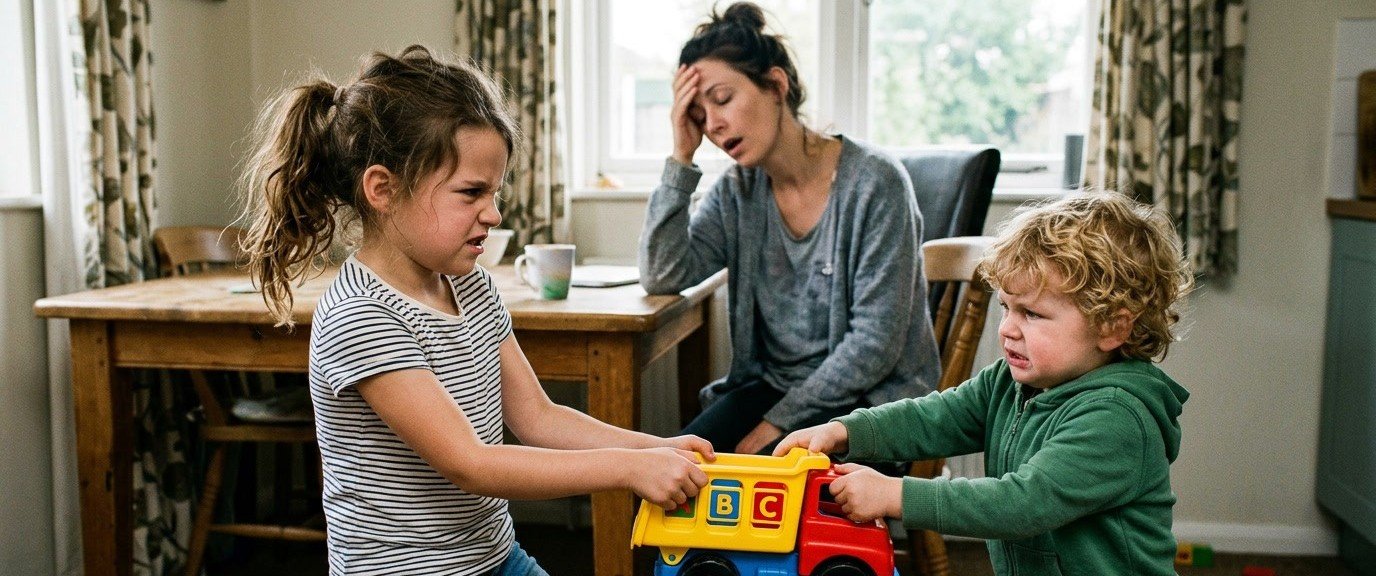
If you’re a parent, you probably hear this multiple times a day:
- “Ammi, he took my toy!”
- “She started it!”
- “It’s not fair!”
And somewhere between breaking up the third argument of the day and raising your voice (even when you promised yourself you wouldn’t), you start wondering…
Why are they always fighting? Am I doing something wrong?
Why are they always fighting? Am I doing something wrong?
Here’s something that might surprise you:
Sibling fights are not only normal—they’re actually important.
Let’s Be Honest for a Moment
Living with siblings is intense.
They share space, attention, toys… and sometimes even your patience.
They share space, attention, toys… and sometimes even your patience.
Of course they’re going to argue.
Of course they’ll feel jealous sometimes.
Of course things will feel “unfair” to them.
Of course they’ll feel jealous sometimes.
Of course things will feel “unfair” to them.
But in the middle of all that chaos, something powerful is happening…
They’re learning.
What Your Children Are Really Learning During Fights
It may look like noise and frustration to you, but to them, it’s practice for real life.
Every disagreement is teaching them:
- How to express what they feel
- How to deal with not getting their way
- How to understand someone else’s perspective
- How to solve problems (even if badly at first!)
Think about it—where else do they get such frequent, real-life practice?
So… Should You Let Them Fight?
Not exactly.
Your role isn’t to ignore the fights—but to guide them through it.
Your role isn’t to ignore the fights—but to guide them through it.
Instead of seeing yourself as a referee who has to decide who’s right, try becoming a coach who helps them figure things out.
What You Can Do in Those Heated Moments
1. Pause Before Jumping In
I know it’s tempting to step in immediately and declare a winner.
But when you do that, one child feels unheard—and the other learns to rely on you to “win.”
But when you do that, one child feels unheard—and the other learns to rely on you to “win.”
Try saying:
“I’m here. Let’s hear both sides.”
“I’m here. Let’s hear both sides.”
2. Keep Your Calm (Even When You’re Tired)
This one is hard. Really hard.
But when you respond with shouting, they learn that shouting is how conflicts are handled.
Your calm becomes their lesson.
3. Don’t Just Stop the Fight—Use It
Instead of: “OK! Stop fighting!”
Try:
“What happened?”
“How can we fix this?”
“What would make it fair for both of you?”
Try:
“What happened?”
“How can we fix this?”
“What would make it fair for both of you?”
It takes longer, yes—but it teaches so much more.
4. Let Them Struggle a Little
You don’t have to solve everything for them.
Give them space to think, suggest, and even disagree a bit more—safely.
That’s how real problem-solving skills are built.
5. Be Clear About Boundaries
Fighting is okay. Hurting is not.
Make it clear:
- No hitting
- No mean or hurtful words
- No crossing physical limits
You’re not stopping the conflict—you’re shaping how it happens.
6. Watch Out for the “Hidden Need”
Sometimes the fight isn’t about the toy.
It’s about:
- Wanting your attention
- Feeling left out
- Feeling “less loved” in that moment
A little one-on-one time can reduce a lot of conflict.
7. Drop the Comparisons
Even small comments like
“Why can’t you be more like your sister?”
can quietly build resentment.
“Why can’t you be more like your sister?”
can quietly build resentment.
Each child wants to feel seen for who they are—not compared.
When You Should Step In Immediately
There are moments when you need to act fast:
- If it turns physical
- If one child is constantly overpowering the other
- If emotions are completely out of control
- Safety always comes first.
A Gentle Reminder for You
You’re not failing because your kids fight.
You’re raising humans who are learning how to navigate relationships.
You’re raising humans who are learning how to navigate relationships.
And yes, it’s messy.
Yes, it’s loud.
Yes, it can test your patience in ways nothing else does.
Yes, it’s loud.
Yes, it can test your patience in ways nothing else does.
But these small, everyday conflicts?
They’re slowly teaching your children how to handle the big ones in life.
They’re slowly teaching your children how to handle the big ones in life.
In the End…
One day, these same kids who argue over the remote or who sat where…
will grow into adults who (hopefully) understand each other, support each other, and stand by each other.
will grow into adults who (hopefully) understand each other, support each other, and stand by each other.
And a lot of that starts right now—
in the middle of those noisy, frustrating, completely normal sibling fights.
in the middle of those noisy, frustrating, completely normal sibling fights.
If this is something you’re struggling with, you’re not alone—and you don’t have to figure it out on your own either.